CALL 626.357.3535

You Need to Flush Sediment from Your LA Water Heater
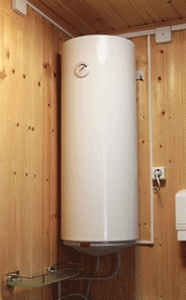 How long will your water heater last before it needs replacement? The average is around 10 to 12 years, assuming it receives regular professional maintenance. However, hard water can reduce expected service life and substantially increase water heating costs. The “hardness” of water refers to non-toxic, naturally-occurring minerals such as calcium carbonate and magnesium. Here in LA, our municipal water supply is moderately hard. Hard water is harmless, but it can create issues for your water heater. Here’s why.
When heated, dissolved minerals in water precipitate and settle to the bottom of the tank, forming a layer of sediment. This sediment gets increasingly deeper and insulates water in the tank from the heat of the burner flame. The burner runs longer and longer to heat water to the right temperature, consuming more energy. You’ll see it on your monthly bill. In addition, the presence of sediment promotes corrosion inside the tank, leading to leakage or even rupture, making premature replacement of the entire heater necessary.
Annual flushing purges sediment from the tank before it has time to solidify into a rock-like substance that can’t be removed. Here’s the procedure:
- Shut the cold water inlet valve and turn off the water heater at the gas valve.
- Attach a garden hose to the drain tap on the bottom of the tank. Place the other end of the hose outside the house.
- Open the drain valve and drain the tank.
- After the tank is drained, open and close the cold water inlet valve several times rapidly to generate a flushing effect inside the tank and dislodge any remaining sediment.
- Close the drain valve and disconnect the hose.
- Open the cold water inlet valve and re-light the heater per manufacturer’s instructions.
Contact Air-Tro, Inc. for professional maintenance to extend water heater service life and keep operating costs low.
Our goal is to help educate our customers in the greater Los Angeles, California area about energy and home comfort issues (specific to HVAC systems).
Credit/Copyright Attribution: “sommthink/Shutterstock”