CALL 626.357.3535

Vintage AC History | Pasadena HVAC Experts | Air-Tro
Vintage AC History from Pasadena HVAC Experts
Step back in time with us at Air-Tro, where we’ve been keeping Pasadena families comfortable for over 50 years. Air conditioning history in Pasadena mirrors the broader story of how this once-luxury invention became an everyday essential, transforming sweltering summers into cool, productive days. From the early 1900s breakthroughs to the boom in home adoption during the mid-20th century, let’s uncover when air conditioners became common and how they’ve shaped life in our sunny corner of California. If you’re dealing with an outdated system today, reach out to our team at (626) 357-3535 for expert advice on upgrades.
The Evolution of Air Conditioning: From Invention to Innovation
The journey of air conditioning started long before it cooled Pasadena’s historic bungalows. In 1902, engineer Willis Carrier designed the first modern system to control humidity in a New York printing plant, laying the groundwork for what we know today. This wasn’t about comfort at first – it solved industrial problems like paper warping in humid conditions. Fast forward to the 1920s, and AC made its way into movie theaters, drawing crowds seeking relief from the heat. By the 1930s, window units emerged, but they were bulky and pricey, limiting them to upscale spots.
Pasadena’s own climate, with its hot, dry summers averaging over 90 degrees Fahrenheit in July, made early AC a game-changer for local businesses. According to the U.S. Department of Energy, public buildings like department stores adopted cooling systems in the 1930s to boost shopper comfort and sales. Imagine strolling Colorado Boulevard without breaking a sweat – early adopters here paved the way. As technology advanced, compressors shrank, making units more efficient and affordable.
When Did Air Conditioners Become Common in Homes?
Air conditioners didn’t become a household staple overnight. In the early days, they were rare luxuries, with only a handful of U.S. homes equipped by the 1940s. The real shift happened post-World War II, as suburban growth exploded and manufacturing ramped up. By the 1950s, residential AC started gaining traction, especially in warmer regions like Southern California. Data from the U.S. Energy Information Administration shows that while fewer than 10% of homes had AC in 1950, adoption surged to about 20% by 1960, driven by falling costs and rising incomes.
In Pasadena, this timeline aligned with the city’s post-war boom, when new tract homes incorporated central systems to combat the Inland Empire’s heat waves. When did air conditioners become common nationwide? The tipping point came in the 1960s and 1970s, with over half of new homes including AC by 1970. Today, nearly 90% of U.S. households rely on it, per the same EIA report. This evolution not only improved daily life but also boosted productivity – studies note that extreme heat can reduce work output by up to 20%.
Air Conditioning’s Impact on Pasadena and Southern California
Pasadena’s story with air conditioning is tied to California’s broader embrace of innovation. In the 1950s, as Hollywood and aerospace industries flourished nearby, AC became essential for keeping workers focused amid rising temperatures. Local lore highlights how early systems in landmarks like the Rose Bowl helped during hot events, though widespread home use took off later. By the 1960s, AC reshaped architecture here, allowing for larger windows and open floor plans without fear of summer discomfort.
Fun fact: Air conditioning’s rise even influenced migration patterns, making hot climates like ours more livable and contributing to population growth in the Sun Belt. In fact, AC now accounts for about 12% of U.S. household electricity, underscoring its deep integration into daily life. In Pasadena, where summers can feel endless, this tech has preserved our quality of life, from family gatherings to quiet evenings.
Vintage Ads: A Humorous Look Back at AC’s Promised Bliss
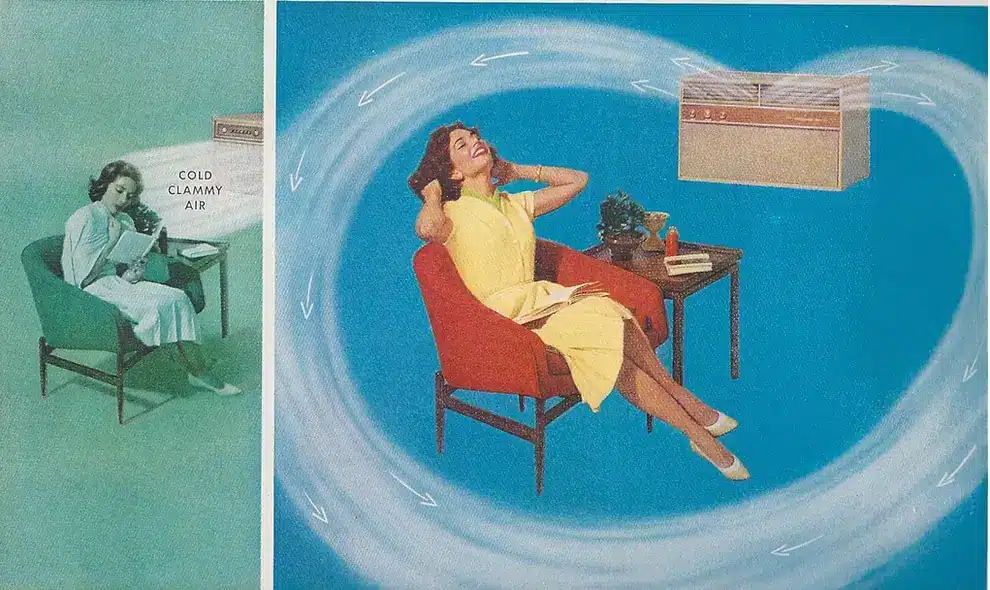
Vintage advertisements from the 1950s and 1960s painted air conditioning as a lifesaver, often with dramatic before-and-after scenes that highlighted comfort’s emotional perks. These ads didn’t just sell units; they sold happier lives, free from “cold clammy air” and endless perspiration.
Take this split-image ad, showing a woman suffering in sticky heat on one side and lounging blissfully under swirling cool air on the other. It screams relief, promising escape from discomfort.
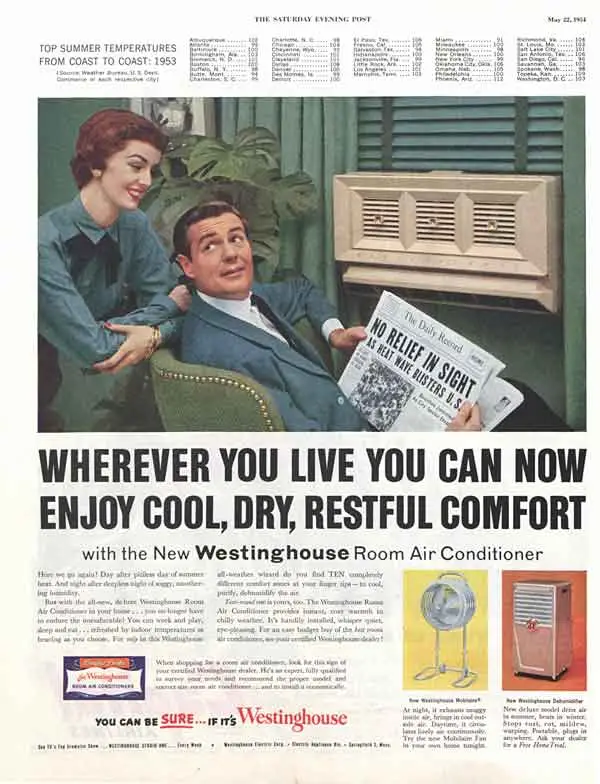
Or consider the Westinghouse ad from The Saturday Evening Post in 1953, listing top summer temperatures across U.S. cities while a couple relaxes indoors. The headline boasts, “Wherever You Live You Can Now Enjoy Cool, Dry, Restful Comfort,” emphasizing nationwide appeal.
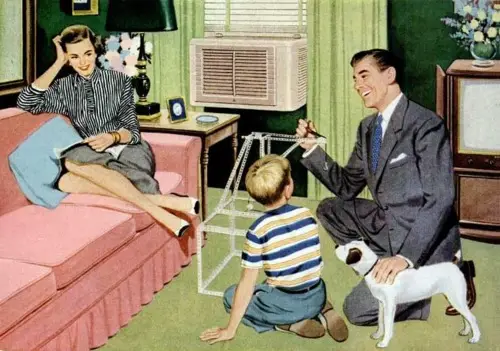
Families featured prominently too. One ad depicts a dad, son, and dog building a playful structure, all thanks to the calm provided by AC – implying it fosters creativity and bonding.
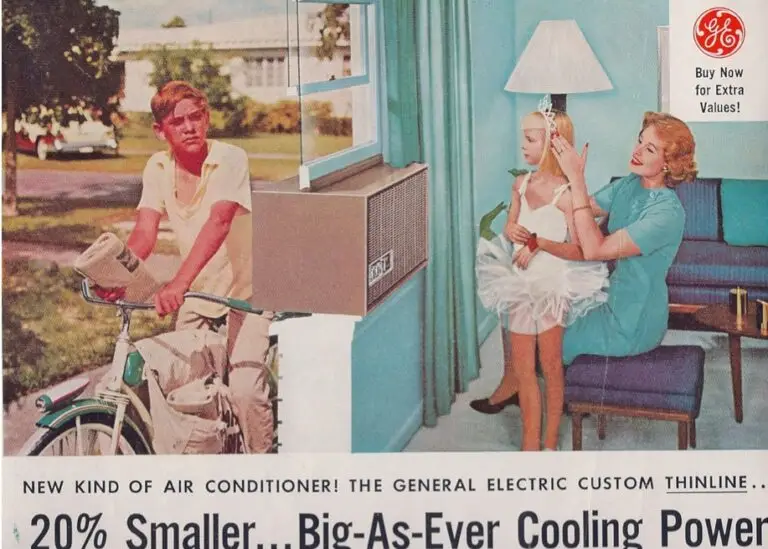
General Electric’s “Custom Thinline” ad from the 1960s shows kids outdoors in heat while mom and daughter stay cool inside, touting “20% Smaller… Big-As-Ever Cooling Power.”
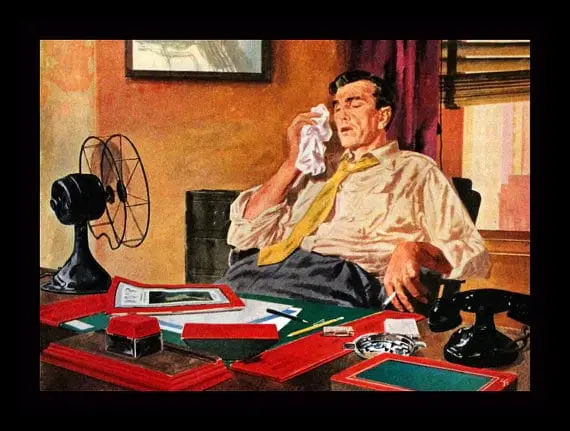
Contrast that with the sweaty office worker mopping his brow beside a fan – a stark reminder of life without AC, where productivity plummets.
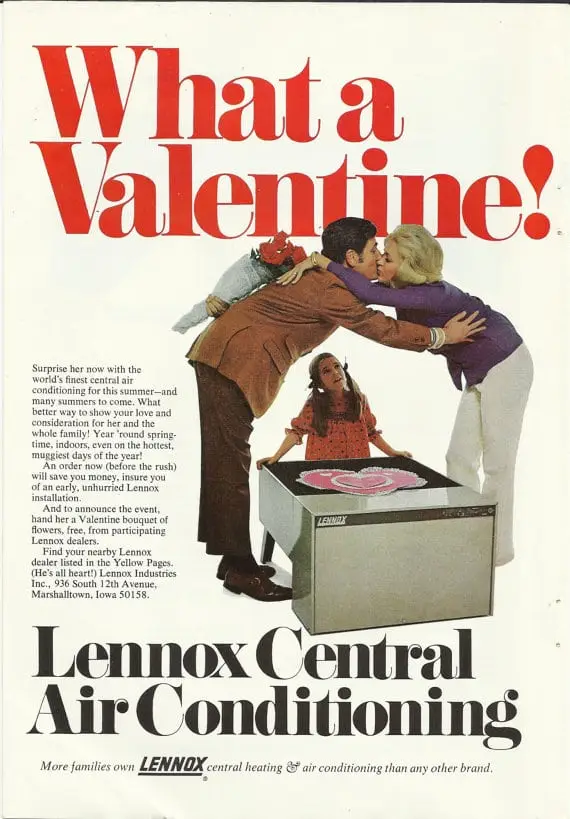
Lennox took a romantic angle in the 1970s with “What a Valentine!” showing a family embracing over central AC, positioning it as a gift for endless summers.
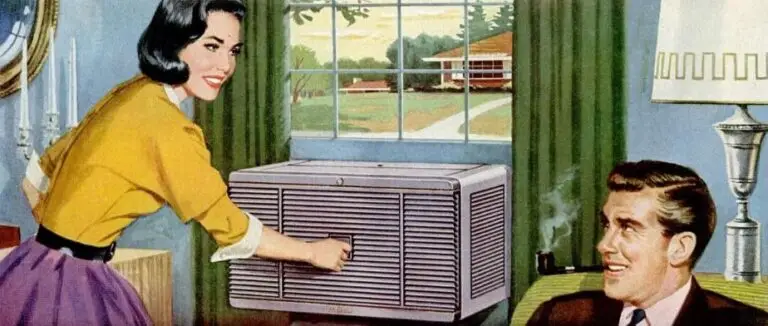
A woman effortlessly activates her unit while her partner relaxes, pipe in hand, underscoring ease and marital harmony.
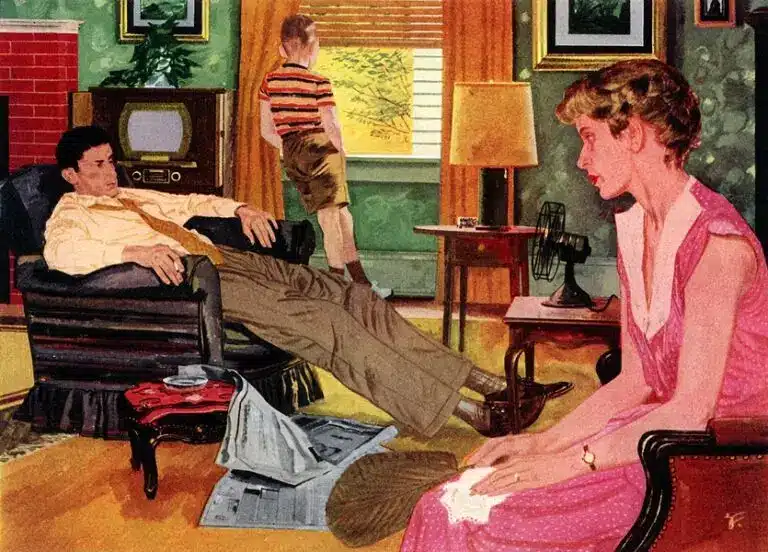
Without AC, families looked miserable: a mom regretting life choices, dad fanning himself, and a kid staring longingly outside.
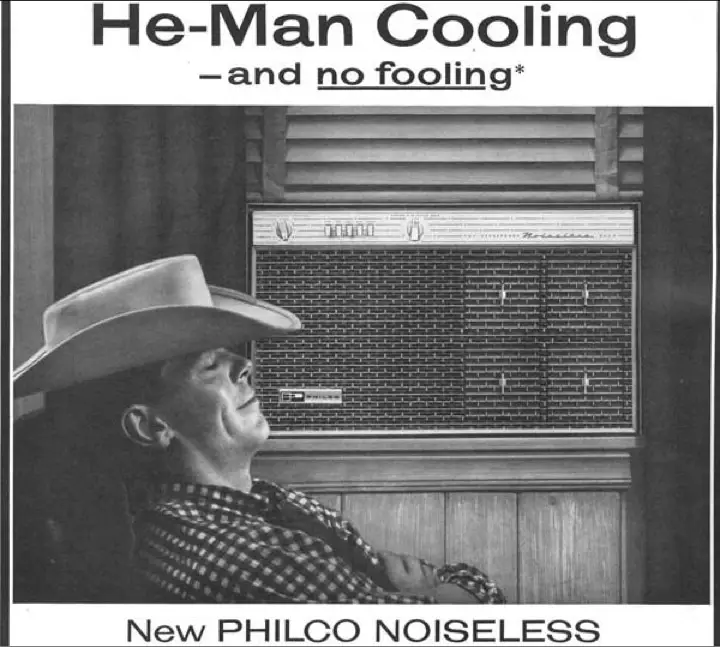
Philco’s “He-Man Cooling” ad features a cowboy-hatted man reveling in noiseless comfort, appealing to rugged individualism.
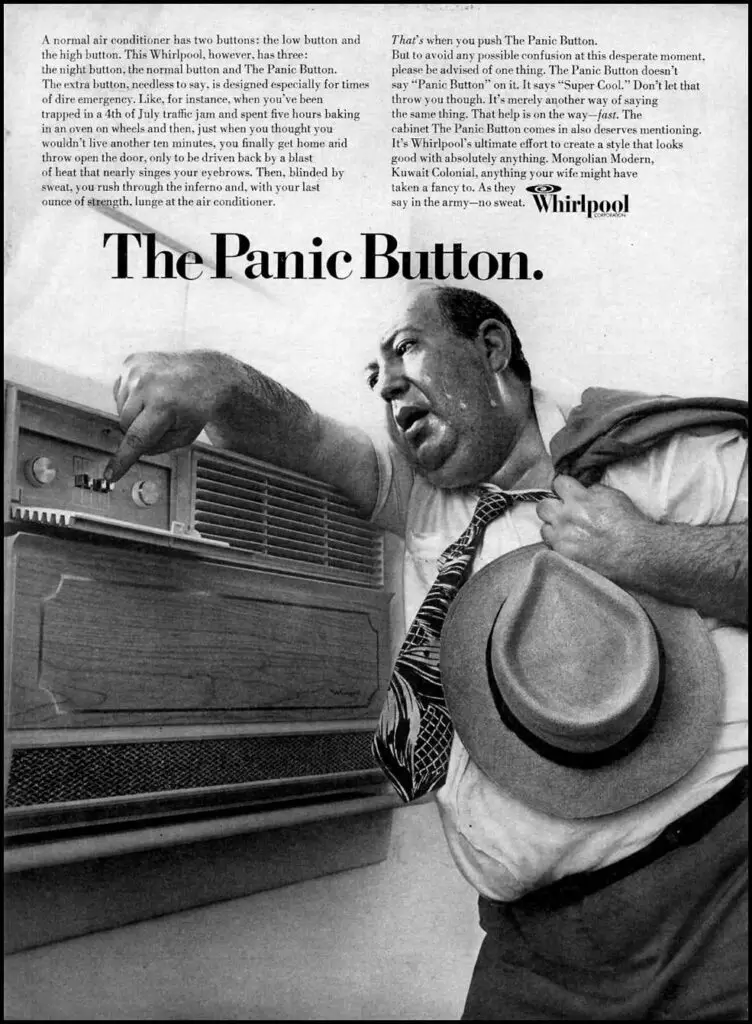
Finally, Whirlpool’s “Panic Button” humorously shows a man desperately hitting a super-cool switch during a heat emergency.
These ads reveal how AC was marketed as essential for health, relationships, and success. Even back then, it promised what we deliver today at Air-Tro. Ready to experience that vintage-inspired comfort with modern tech? Click over to our AC installation and replacement services for details.
Looking for More Funny or Interesting HVAC History? Learn why not everybody liked air conditioning at first, discover if George Washington was actually an HVAC specialist, or about famous building and their HVAC systems.
Frequently Asked Questions about Air Conditioning History
What Is the Origin of Modern Air Conditioning? Willis Carrier invented it in 1902 to control humidity in a printing plant, per the U.S. Department of Energy.
When Did Air Conditioners Become Common in American Homes? They gained popularity in the 1950s, with adoption rising sharply by the 1960s, according to the U.S. Energy Information Administration.
How Has Air Conditioning Impacted Pasadena? It transformed local living by making hot summers bearable, aligning with Southern California’s post-war growth, as noted in historical accounts.
What Benefits Did Vintage AC Ads Highlight? They emphasized family happiness, productivity, and relief from heat, often with humorous contrasts.
Discover Modern Comfort with Air-Tro’s Air Conditioning History in Pasadena
As we reflect on air conditioning history in Pasadena, it’s clear this innovation has evolved from a novelty to a necessity, much like our commitment at Air-Tro to delivering top-tier HVAC solutions. Whether you’re inspired by those vintage ads or simply tired of uneven cooling, now’s the time to upgrade. Contact our Pasadena HVAC experts today at (626) 357-3535 for a consultation on efficient AC installation – let’s keep your home as comfortable as those ad families promised.
Published on: September 13, 2016 | Updated on: October 27, 2025