CALL 626.357.3535

Were Our Founding Fathers HVAC Specialists?
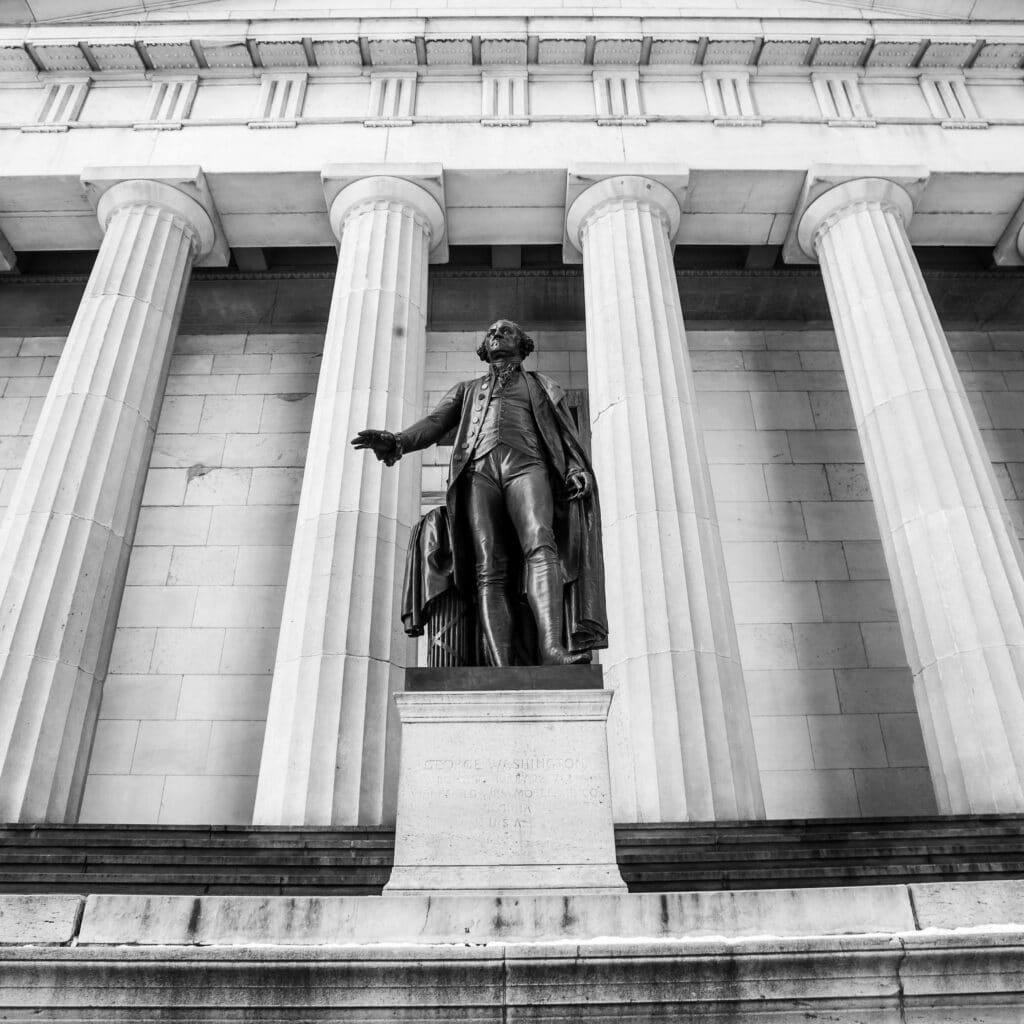
Celebrating 250 Years of American Comfort Innovation
Published: 07/04/2017
Updated: 07/01/2026
Whether you are heading to a parade, firing up the grill for a family gathering, or simply enjoying the comfort of your home this summer, Air-Tro hopes you are having a wonderful day. This year marks the 250th anniversary of American independence, and it feels like the perfect moment to look back at the country’s earliest climate observers – our Founding Fathers – and trace how far comfort technology has come.
America’s Founding Fathers Were the Nation’s First Official Climate Observers
Long before mechanical cooling existed, thoughtful leaders like Thomas Jefferson and George Washington paid close attention to temperature, weather patterns, and how indoor spaces could feel more livable. Their careful notes and practical experiments laid an early foundation for the comfort innovations we rely on today.
Thomas Jefferson: Avid Weather Observer and Designer of Comfortable Spaces
Thomas Jefferson took weather observation seriously. On July 4, 1776, while in Philadelphia for the adoption of the Declaration of Independence, he purchased a thermometer from a local merchant. According to records preserved at Monticello, he began consistent meteorological notes around that time and recorded conditions in the city, including a high of 76 degrees Fahrenheit on the very day the Declaration was approved.
At his beloved Monticello, Jefferson designed the home with natural ventilation in mind to ease the steamy Virginia summers. He tracked temperature and climate data for years and shared his insights in Notes on the State of Virginia. One memorable passage captures his appreciation for Virginia’s climate and its effect on daily life and happiness:
“On the whole I find nothing any where else in point of climate which Virginia need envy to any part of the world. Here they are locked up in ice and snow for six months. Spring and autumn, which make a paradise of our country, are rigorous winter with them, and a Tropical summer breaks on them all at once. When we consider how much climate contributes to the happiness of our condition, by the fine sensations it excites, and the productions it is the parent of, we have reason to value highly the accident of birth in such an one as that of Virginia.”
Jefferson understood that comfortable indoor conditions matter – not just for productivity, but for quality of life. His blend of scientific curiosity and architectural thinking feels surprisingly modern.
George Washington: Practical Farmer and Keen Observer of Indoor Comfort
 George Washington approached weather with the eye of a farmer rather than a scientist. He did not pursue grand data-collection projects, yet he kept practical records that reveal a real interest in how temperature behaved inside his home. In the summer of 1787, he commissioned a handsome weather vane from craftsman John Rakestraw. Shaped like a dove carrying an olive branch and still perched in the cupola at Mount Vernon today, it served both practical and symbolic purposes.
Washington also recorded indoor temperatures with notable precision. On December 7, 1785, he noted in his diary: “Thermometer at 52 in the Morning & 59 at Noon, but removing it afterwards out of the room where the fire was, into the East Entry leading in to my Study, this circumstance with the encrease of the cold fell the Mercury to 42.” His observation of how moving the instrument just a short distance changed the reading shows an intuitive grasp of microclimates within a building – something HVAC professionals still consider when designing or troubleshooting systems.
While Mount Vernon and Monticello had no air conditioning or central heating, Washington, Jefferson, and their contemporaries clearly cared about weather patterns, data collection, and the difference between outdoor conditions and indoor comfort.
Early American Comfort Innovations Rooted in Observation
The Founding generation worked with what they had – thoughtful architecture, natural ventilation strategies, and careful observation. These early efforts prefigured later mechanical solutions. Homes and public buildings of the era often featured high ceilings, strategic window placement, cupolas, and cross-breezes to manage heat – ideas that still influence passive design today.
Their curiosity about measurable conditions helped set the stage for the next chapters in American comfort history. If you maintain or update an older home in our area, you may appreciate how these historical principles intersect with modern HVAC retrofits designed for historic properties.
Fun Facts Connecting the Founding Era to HVAC History
Here are a few interesting details that highlight how far we have come:
- Thomas Jefferson bought his thermometer in Philadelphia on July 4, 1776, and noted a high temperature of 76 degrees that afternoon while the Declaration was being finalized.
- George Washington’s detailed diary entry from December 1785 shows he understood that simply moving a thermometer from a heated room into a cooler hallway could drop the reading by 17 degrees – early recognition of indoor temperature variations.
- Monticello’s design incorporated advanced natural ventilation features for its time, helping Jefferson manage summer heat without mechanical assistance.
- The first practical modern air conditioning system arrived more than a century later, with widespread home adoption accelerating after World War II.
- For a nostalgic look at how early air conditioning was advertised and perceived, explore our collection of vintage air conditioning advertisements from the mid-20th century.
These small historical moments remind us that the desire for comfortable, controlled indoor environments is nothing new – it has simply become far more achievable and efficient.
250 Years of Progress: From Thermometers to Smart, Efficient HVAC Systems
In the 250 years since 1776, American comfort technology has advanced dramatically. Mechanical refrigeration and air conditioning emerged in the 19th and early 20th centuries. By the mid-1900s, central systems became more common in homes, and the post-war building boom helped bring cooled air to millions. Today, according to the U.S. Energy Information Administration, air conditioning is a standard feature in the vast majority of American households – something unimaginable in the Founders’ time.
Modern systems do far more than cool or heat. They manage humidity, improve indoor air quality, operate with far greater energy efficiency, and integrate smart controls that learn household patterns. A well-designed smart thermostat can help maintain steady comfort while reducing unnecessary energy use. Many homeowners now pair high-efficiency equipment with renewable options, including solar-assisted HVAC solutions.
The same spirit of observation and improvement that drove Jefferson and Washington lives on in today’s best HVAC practices and include precise measurement, attention to how a building actually performs, and a focus on reliable, efficient comfort.
If your current system leaves rooms feeling inconsistent or your energy bills higher than they should be, our team at Air-Tro can assess your home and recommend upgrades that bring real results. Many clients are surprised by how much quieter and more consistent modern equipment feels compared with older units.
How Air-Tro Continues the Legacy of Innovation and Comfort
Air-Tro has served families and businesses across the San Gabriel Valley and greater Pasadena area since 1969. That is more than five decades of helping local homeowners and commercial clients achieve reliable comfort – part of the longer American story of progress that began with careful observers like Jefferson and Washington.
We specialize in high-quality installation, thoughtful system design for both new and older homes, smart thermostat integration, and ongoing maintenance that keeps equipment running at peak performance. Whether your priority is energy savings, quieter operation, better humidity control, or simply dependable cooling on the hottest days, we focus on solutions that fit your specific home and goals.
If you have been thinking about upgrading your system or simply want a professional second opinion on performance and options, we are here to help. Many homeowners find that a modern, properly sized system transforms daily comfort in ways they did not expect.
Bring 250 Years of HVAC Progress Home with Air-Tro’s Expert Services
Just as George Washington, HVAC specialist in spirit, paid close attention to conditions at Mount Vernon, our team pays close attention to the unique comfort needs of homes and businesses throughout our community. After 250 years of American innovation in climate control, you no longer have to settle for uneven temperatures, high energy use, or outdated equipment.
Whether you are ready for a full system replacement, a smart thermostat upgrade, or simply want reliable maintenance that protects your investment, Air-Tro is here to help. Call us today at (626) 357-3535 or reach out through our website to schedule a consultation. Learn about our history and let us show you how modern HVAC expertise can make your home or office feel comfortably current – every day of the year.